

- Manufacturer warranties are brand-funded — you stand behind your products for defects during a coverage period you define.
- Extended warranties are customer-funded — a customer pays at checkout to extend coverage beyond the manufacturer period, and you earn a share of that revenue.
Manufacturer warranties
A manufacturer warranty is coverage you (the brand) stand behind for product defects and durability issues — separate from shipping claims, which cover problems in transit. You define how long products are covered, which products are eligible, and how claims can be resolved. Manufacturer warranties are brand-funded: Order Protection bills you per claim based on the pricing model you choose.Configuring manufacturer warranties
Manufacturer warranties are configured under Settings → Warranties.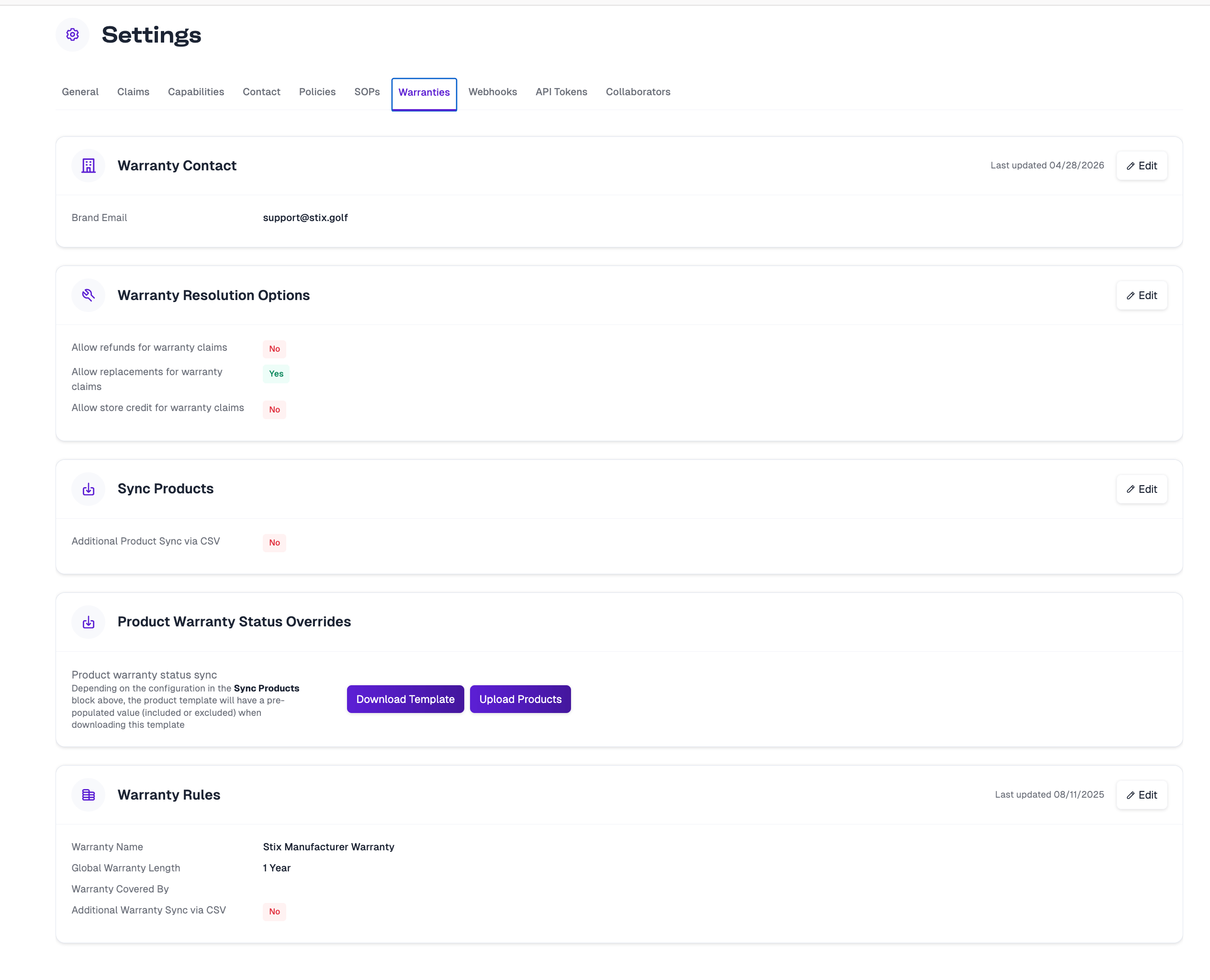
- Warranty Contact — the brand email that warranty matters route to.
- Warranty Rules — the Warranty Name and the Global Warranty Length (the default coverage length — for example, 1 year — applied to your eligible products).
- Warranty Resolution Options — toggles for how warranty claims can be resolved: refunds, replacements/reships, and/or store credit. Only the options you enable are offered on a claim.
Product eligibility and warranty length
Your Global Warranty Length applies to eligible products by default. From the Product Warranty Status Overrides card you can fine-tune coverage per product:- Eligibility — mark specific products as included or excluded from warranty coverage. Changing a parent product cascades to its variants.
- Per-product length — give specific products a different warranty length than the global default.
Pricing and billing (brand-funded)
Because manufacturer warranties are brand-funded, Order Protection bills you per claim. This pricing is set in partnership with the Order Protection team — you have view access to it in your dashboard, but it’s configured together with OP rather than edited on your own. Pricing is defined over a claim-value range, with Brand as the payer, and a pricing model that determines how each charge is calculated: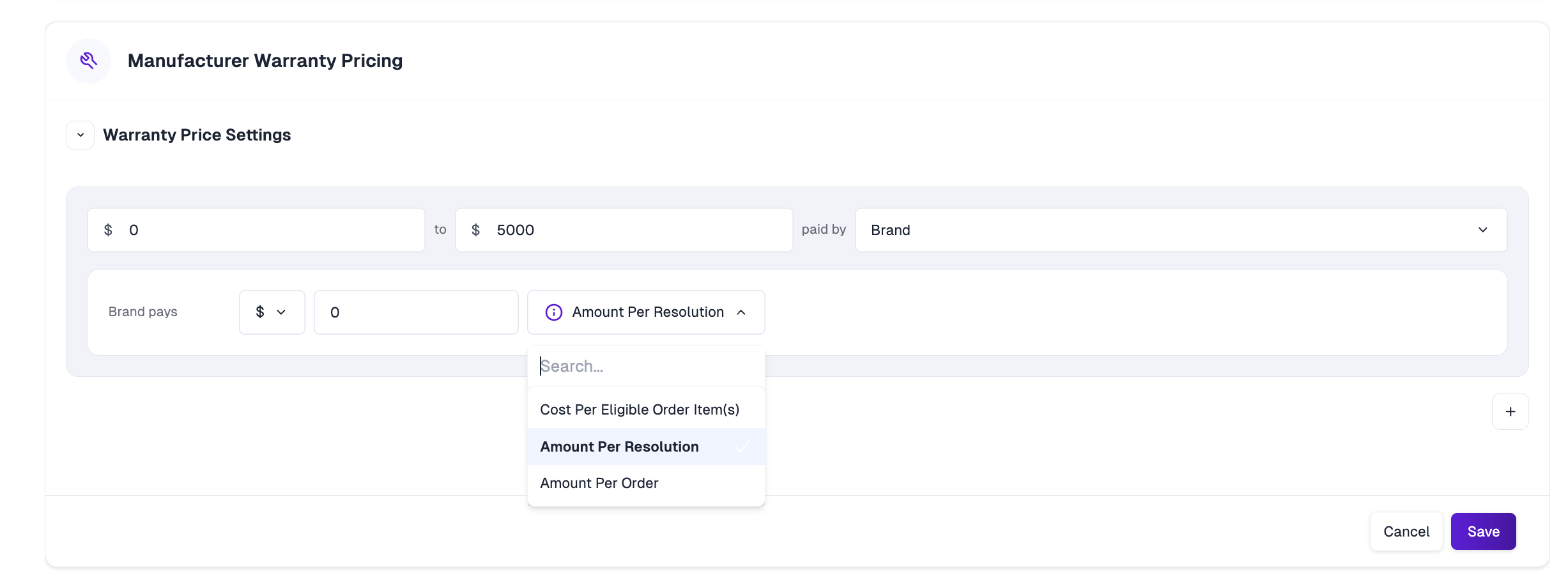
- Cost Per Eligible Order Item — a set amount for each covered item on the claim.
- Amount Per Resolution — a set amount based on the resolution issued.
- Amount Per Order — a flat amount per claim, regardless of item count.
Filing a manufacturer warranty claim
From the customer’s side, filing a warranty claim is straightforward:1
Look up the order
The customer enters their order number and email in your claim portal.
2
Select the affected items
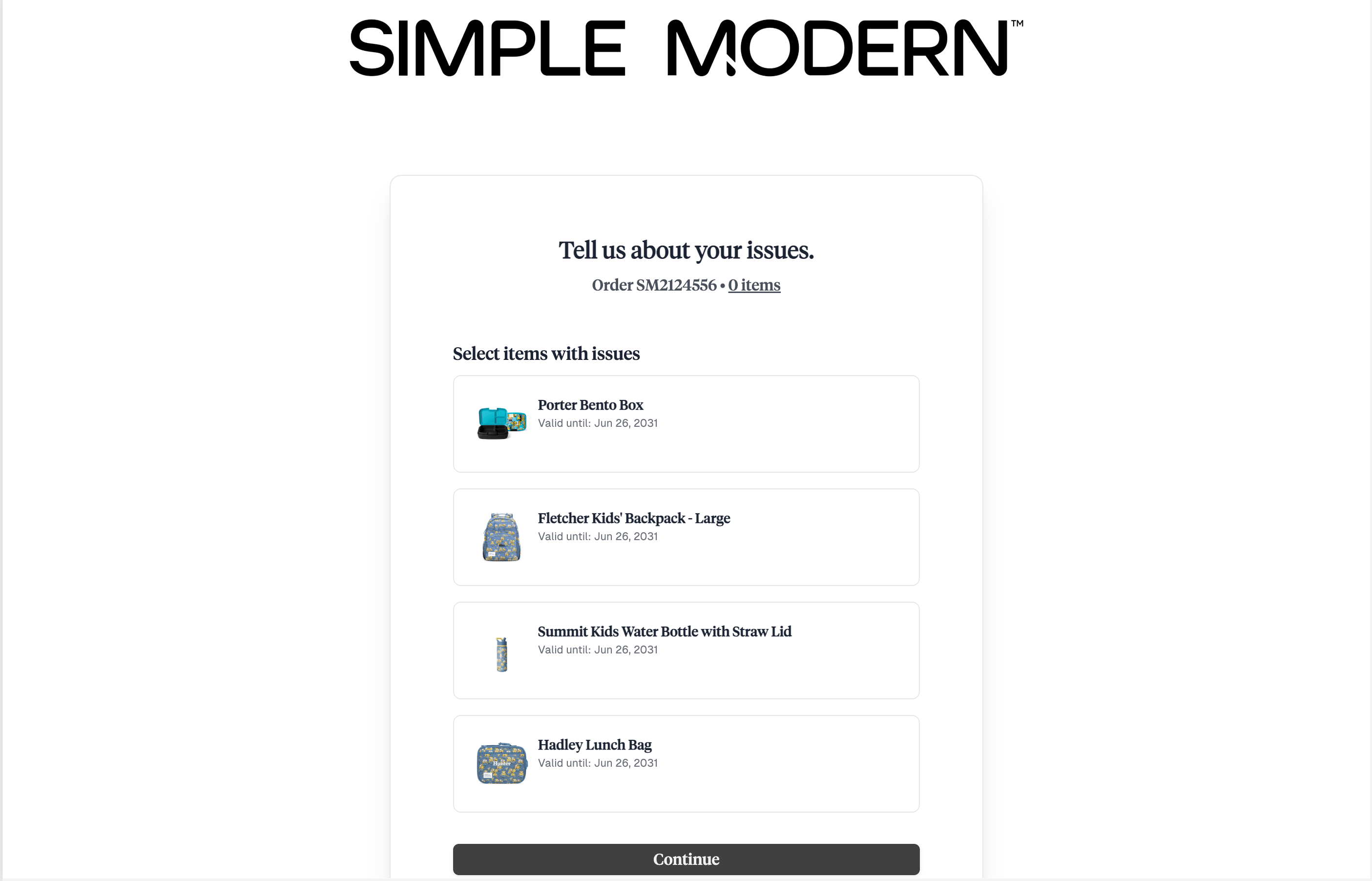
Each item shows a “Valid until” date. Items still within their warranty window are selectable; expired items are shown as ineligible.
3
Describe the issue
For each item, the customer picks What’s the issue with this item? (for example, Damaged or Defective), then a more specific sub-issue type (for example, Broken Lid or Broken Handle), and adds photos and details.
4
Choose a resolution
The customer selects from the resolution options you enabled (refund, replacement/reship, or store credit).
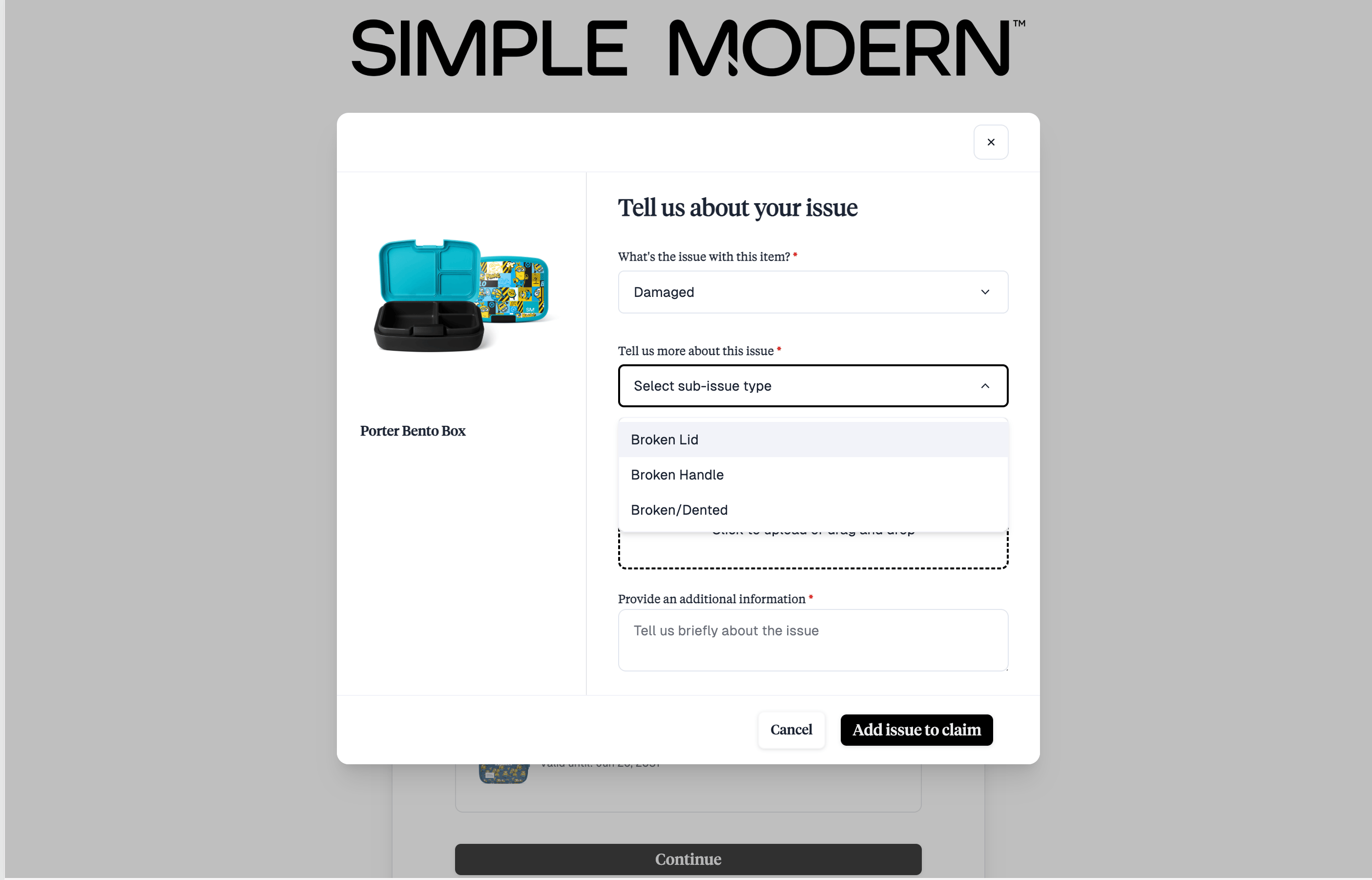
Sub-issue types are configurable per brand — see Claim Sub-Type Setup. For items purchased outside your store, warranty claims use alternate sales channels.
Extended warranties
An extended warranty is customer-funded coverage that extends protection beyond the manufacturer warranty period. Instead of the brand covering the cost, the customer opts in and pays for the longer coverage — and the brand earns a share of that revenue.Offered at the order level (not the product page)
Order Protection sells extended warranties at the order level — as a coverage choice the customer makes once at checkout — rather than as options on each product page. At checkout the customer picks a coverage tier (for example, No Coverage, Basic, or Extended Coverage — which bundles an extended warranty with shipping protection and support), and the warranty applies to the eligible items in that order. You define the available warranty lengths yourself in settings; they aren’t limited to any fixed term.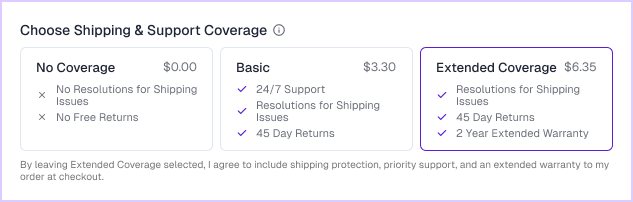
Pricing (customer-funded)
Extended warranty pricing is configured under Shipping & Extended Warranty Pricing, tiered by cart value. Within each tier you offer one or more warranty length options that you define (for example, 2-year or 3-year), each priced as a percentage of cart paid by the customer, alongside your shipping-protection pricing.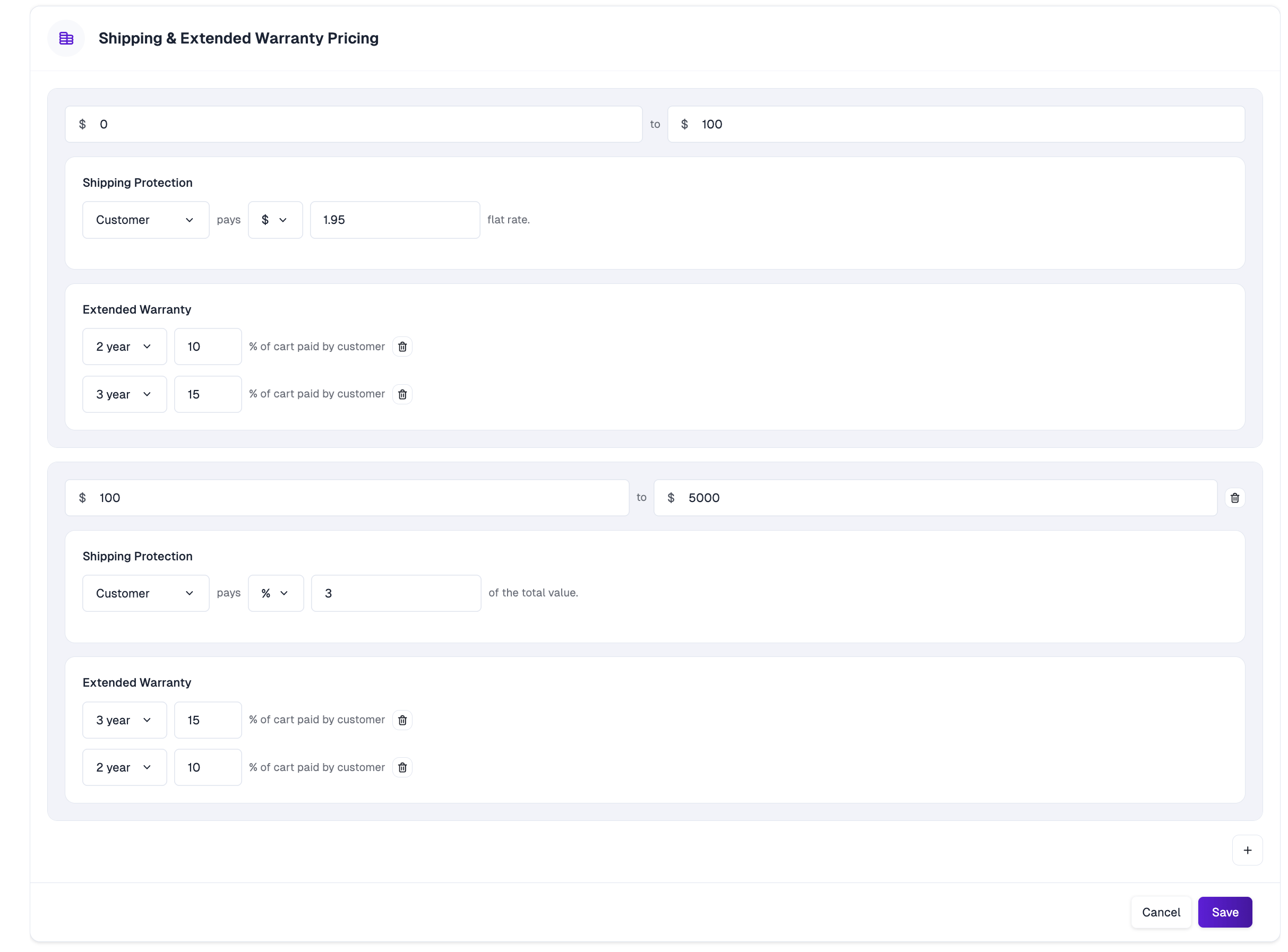
Revenue share
Extended warranties carry a higher revenue share back to the brand than shipping protection — and the reason comes down to how payouts work. Extended warranties have no claim reimbursements: Order Protection doesn’t fund claim payouts on them. The only payout on an extended warranty premium is revenue share, so a larger portion of each premium is returned to you.Shipping protection
A lower revenue share. Part of each premium funds claim reimbursements when shipping claims are approved.
Extended warranties
A higher revenue share. There are no claim reimbursements — revenue share is the only payout on the premium.
The extended-warranty revenue-share percentage is set by Order Protection. Reach out to your Customer Success Manager if you have questions about your rate.